Coffee-machine dimensions are annoyingly easy to misread. A slim body can hide a deep water tank, and a compact manual machine may need a grinder sitting beside it. Measure the whole routine, not just the machine.
For most small kitchens, the sweet spot is a machine that stays under 20 cm wide without making milk drinks a chore.
Three machines worth understanding.
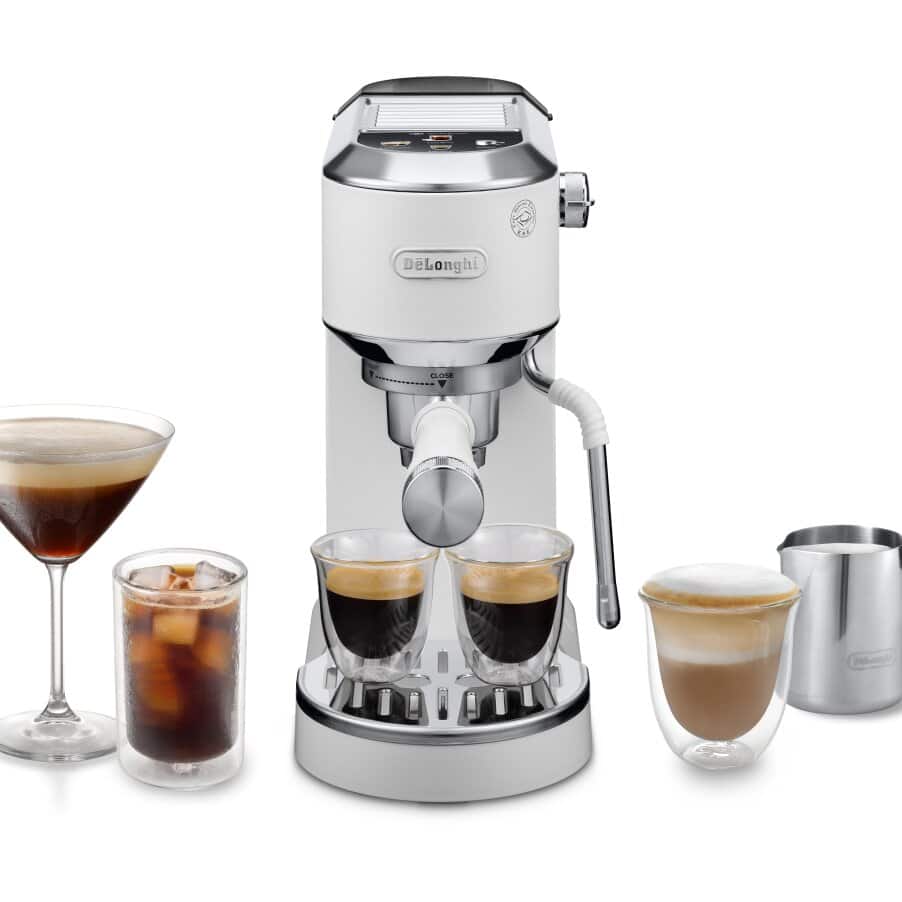
De’Longhi Dedica Duo
At 14.9 cm wide, it can occupy the awkward strip of worktop that many espresso machines simply cannot use.
- Checked price
- £279.99
- Width
- 14.9 cm
- Milk
- Manual steam
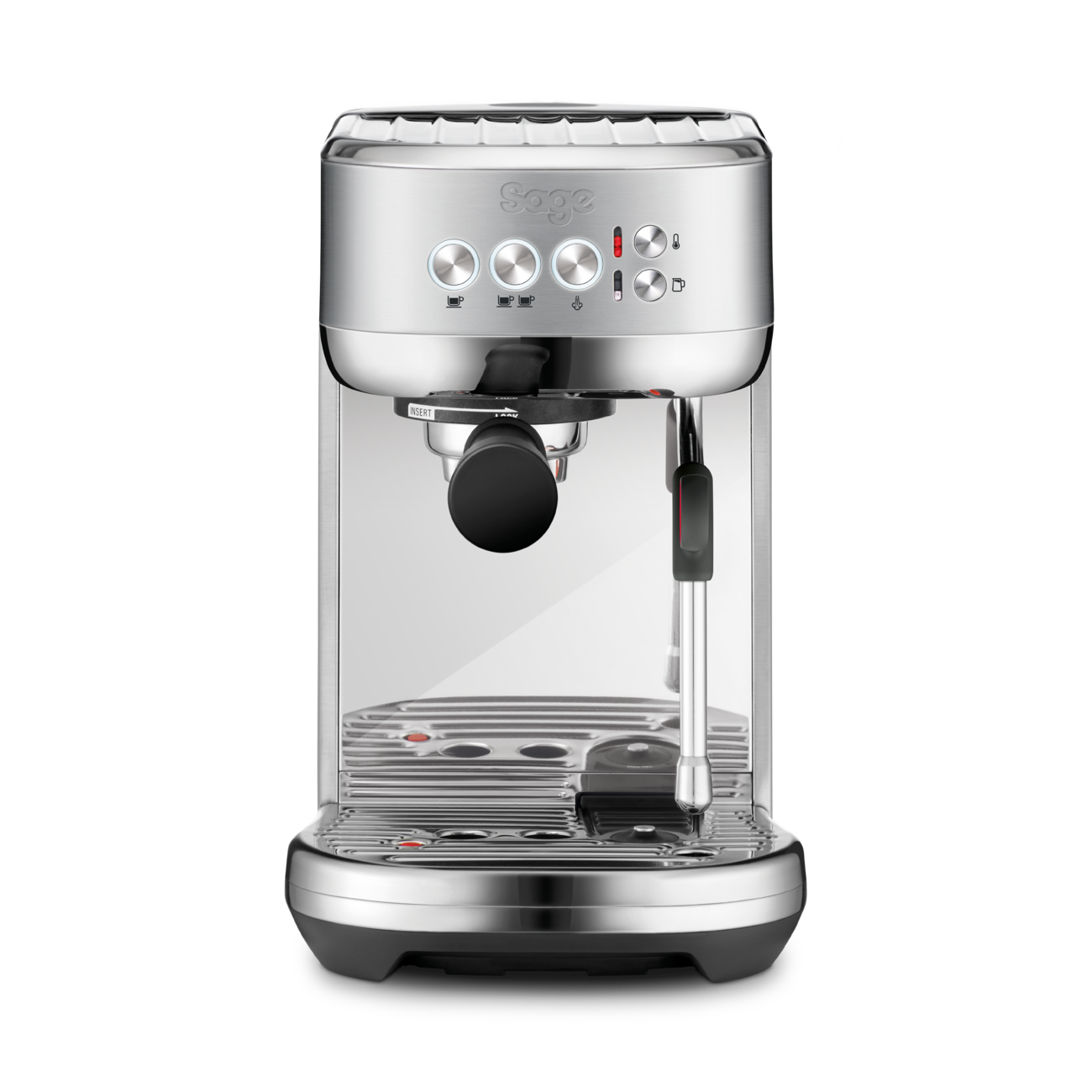
Sage Bambino Plus
The 19.4 cm body is still genuinely narrow, while the fast heat-up and automatic milk make it easier to live with every day.
- Checked price
- £329.95
- Width
- 19.4 cm
- Milk
- Auto steam
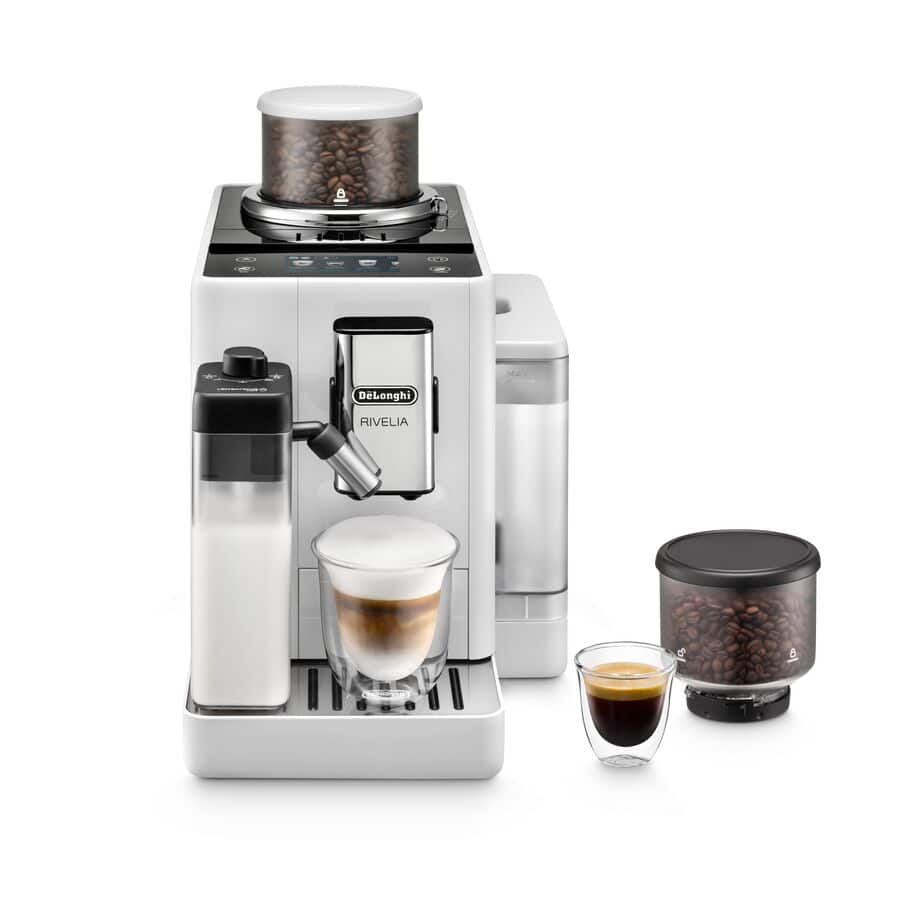
De’Longhi Rivelia
At 24.5 cm wide it is unusually slim for a bean-to-cup machine, and the grinder and milk system are already contained.
- Checked price
- £599
- Width
- 24.5 cm
- Milk
- Auto carafe
Width is only the first measurement
Measure from the wall to the front edge of the worktop, then check where the water tank opens. A machine that technically fits can still be irritating if it has to be pulled forward every morning.
For manual machines, add the grinder width and a little working space for dosing and tamping. A 15 cm machine plus a 13 cm grinder is not a 15 cm setup.
Low cupboards change the shortlist
Top-loading bean hoppers and rear water tanks need vertical clearance. If your cupboards sit low, a front-access water tank can matter more than a few centimetres of machine width.
The Bambino Plus is short at 30.4 cm, but allow extra space to lift and refill its tank. The taller integrated-grinder machines need even more breathing room.
The compact choice I would make
For a flat-white drinker, I would make room for the Bambino Plus and a slim grinder. The automatic milk system removes enough morning friction to justify the slightly larger footprint.
If every centimetre counts, the Dedica Duo is the sensible compromise. If you refuse to make space for a separate grinder, measure the Rivelia’s depth twice.
Before you choose.
How much space should I leave around a coffee machine?
Leave enough room to remove the water tank, operate the portafilter and wipe around the machine. Around 10–12 cm of clear space above is a useful starting point, but check the exact refill design.
Is a pod machine always better for a small kitchen?
Not necessarily. Compact manual machines can be almost as narrow, while giving you more control over beans and milk. Pods win on speed and minimal mess rather than width alone.