Manual machines give you more influence over the cup. Bean-to-cup machines remove more of the repetitive work. Neither is automatically better, and buying the wrong one usually means resenting the morning routine.
The useful question is not “How serious am I about coffee?” It is “How much attention do I want to give this before I have had coffee?”
Three machines worth understanding.
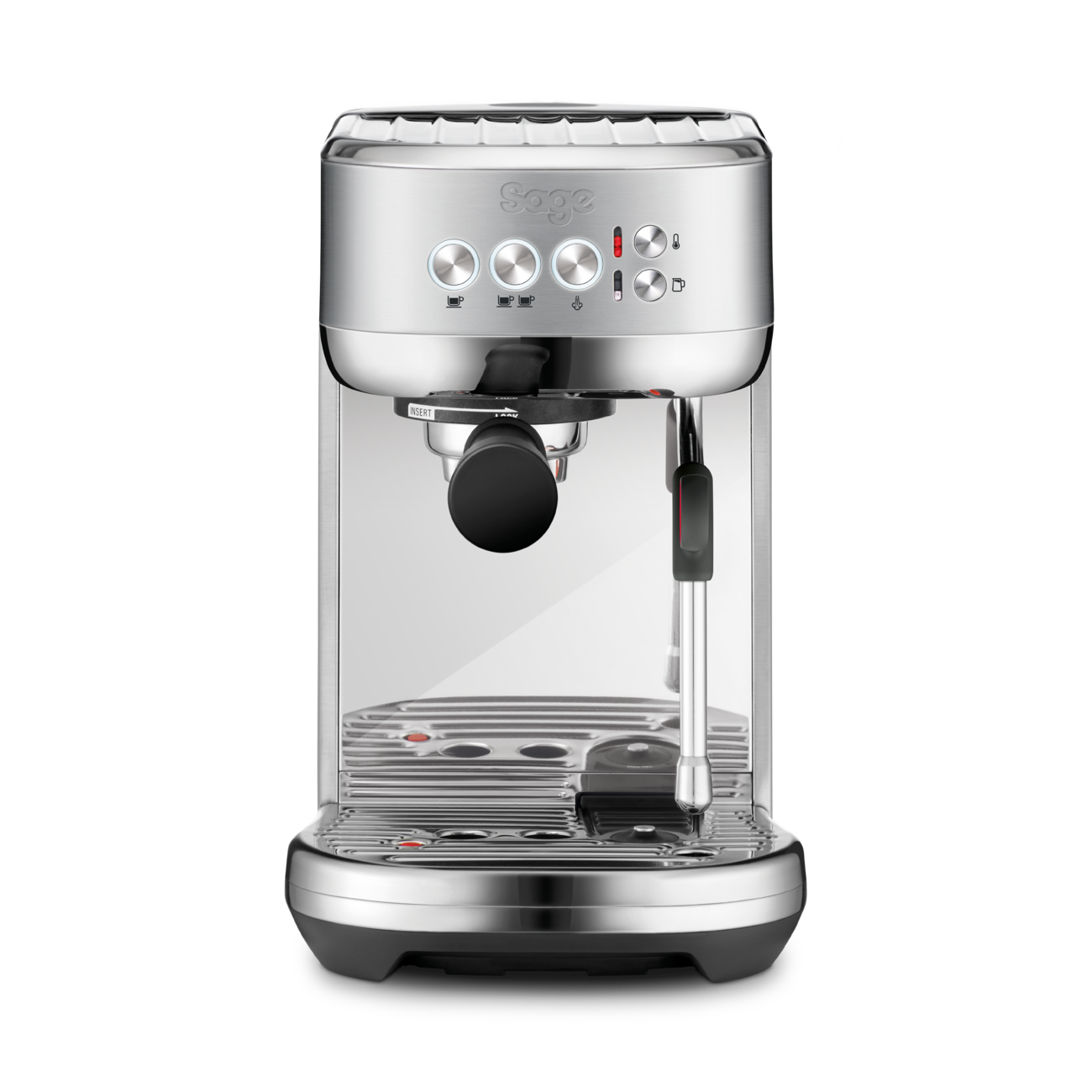
Sage Bambino Plus
You prepare the espresso yourself, but the three-second heat-up and automatic steam wand remove two common frustrations.
- Checked price
- £329.95
- Width
- 19.4 cm
- Milk
- Auto steam
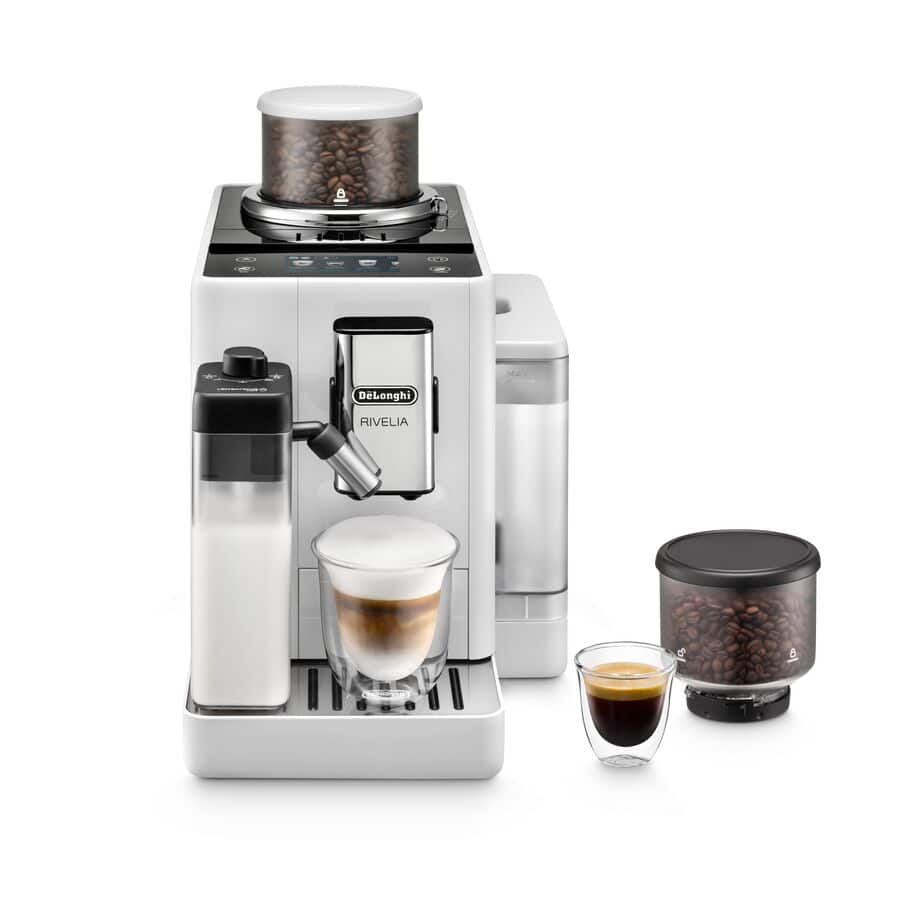
De’Longhi Rivelia
It grinds, doses and brews inside the machine, with automatic milk and profiles for different people.
- Checked price
- £599
- Width
- 24.5 cm
- Milk
- Auto carafe
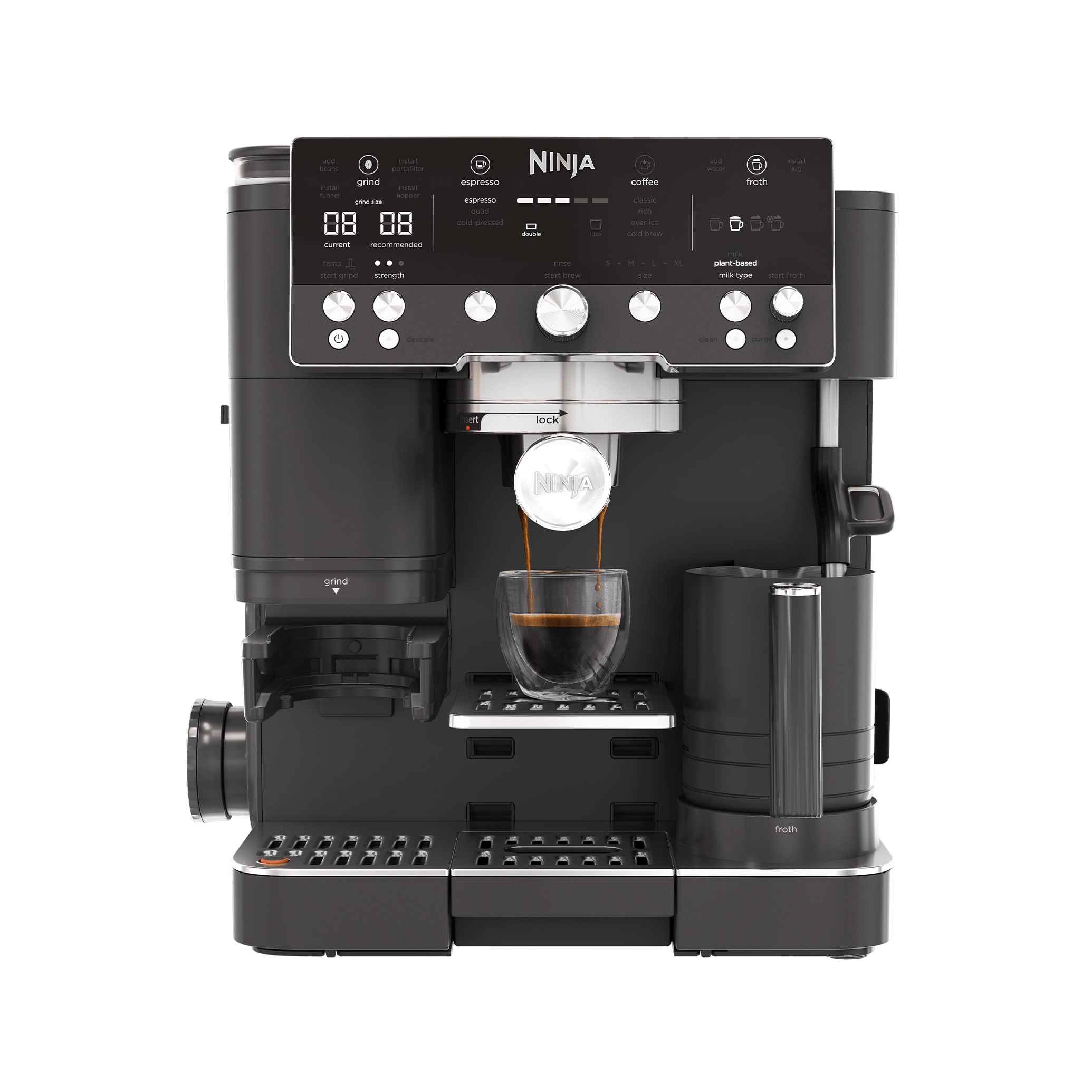
Ninja Luxe Café Premier
You still handle a portafilter, but the grinder, scale, recommendations and automatic frothing guide the difficult parts.
- Checked price
- £439.99
- Width
- 33.6 cm
- Milk
- Auto hot/cold
What manual ownership actually involves
A manual machine means weighing or dosing coffee, grinding it, tamping, locking in the portafilter and deciding when the shot is right. Milk is usually a separate step. Once learned, the routine can be calm and repeatable rather than theatrical.
The advantage is that you can change one thing at a time when the coffee is not right. The disadvantage is that the machine will not hide stale beans, a poor grinder or rushed preparation.
What bean-to-cup ownership actually involves
A bean-to-cup machine moves the messy preparation inside the body. You choose a drink and strength, then the machine grinds and brews. That is excellent for households where several people want different drinks without learning a shared routine.
It is not maintenance-free. Puck bins fill, milk carafes need rinsing and internal brew groups need regular care. The work is easier, but it has not disappeared.
The decision in plain English
If you enjoy cooking from scratch, a manual machine will probably feel rewarding. If you want a reliable appliance, bean-to-cup is the more honest purchase. If you want to learn without starting from a blank page, guided machines now make a convincing third option.
Do not buy manual because it looks more serious, and do not buy automatic because it promises zero effort. Buy the routine you can imagine repeating on a wet Tuesday morning.
Before you choose.
Does manual espresso always taste better?
No. It has a higher ceiling because you can adjust more variables, but a poorly prepared manual shot can be worse than a consistent bean-to-cup coffee.
Are bean-to-cup machines easier to clean?
They reduce loose grounds and manual preparation, but automatic rinses, milk parts, puck bins and removable brew groups still need regular attention.