Coffee-machine pricing is particularly good at hiding the total bill. A £330 manual machine can need a £200 grinder. A £600 all-in-one can include the grinder but leave you wanting a better one two years later.
Before choosing a number, decide whether your budget is for the machine or for the complete setup. They are often not the same thing.
Three machines worth understanding.
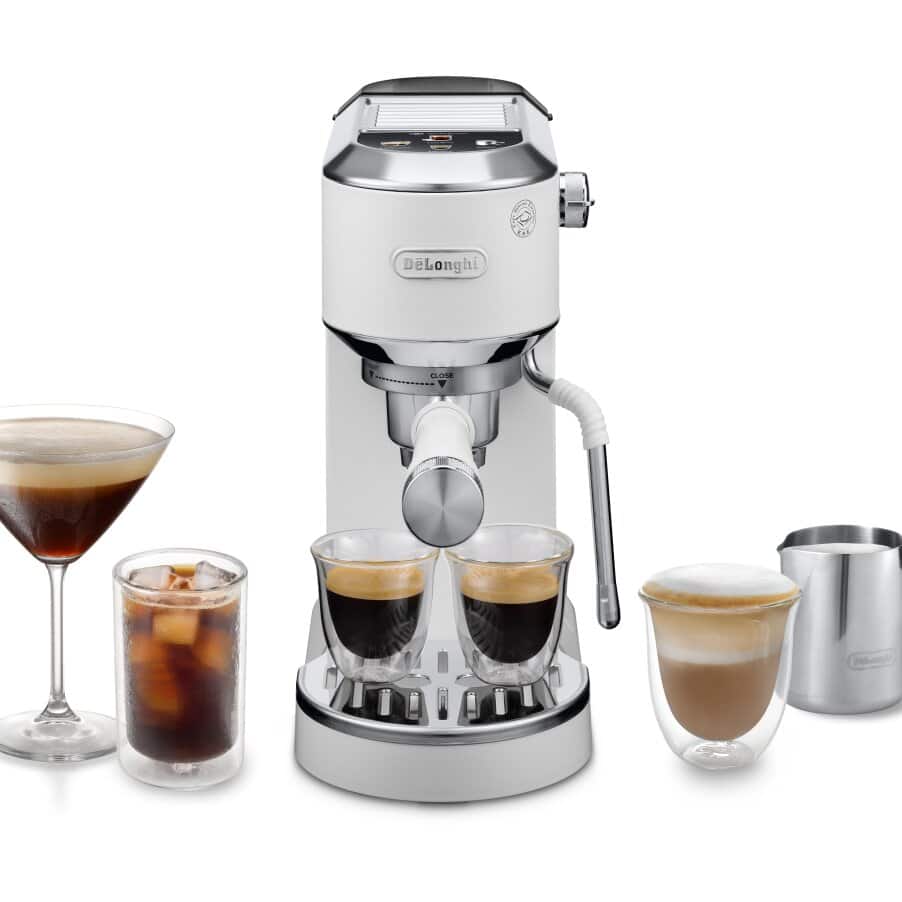
De’Longhi Dedica Duo
A sensible starting point when space is tight and you are willing to learn basic espresso preparation.
- Checked price
- £279.99
- Width
- 14.9 cm
- Milk
- Manual steam
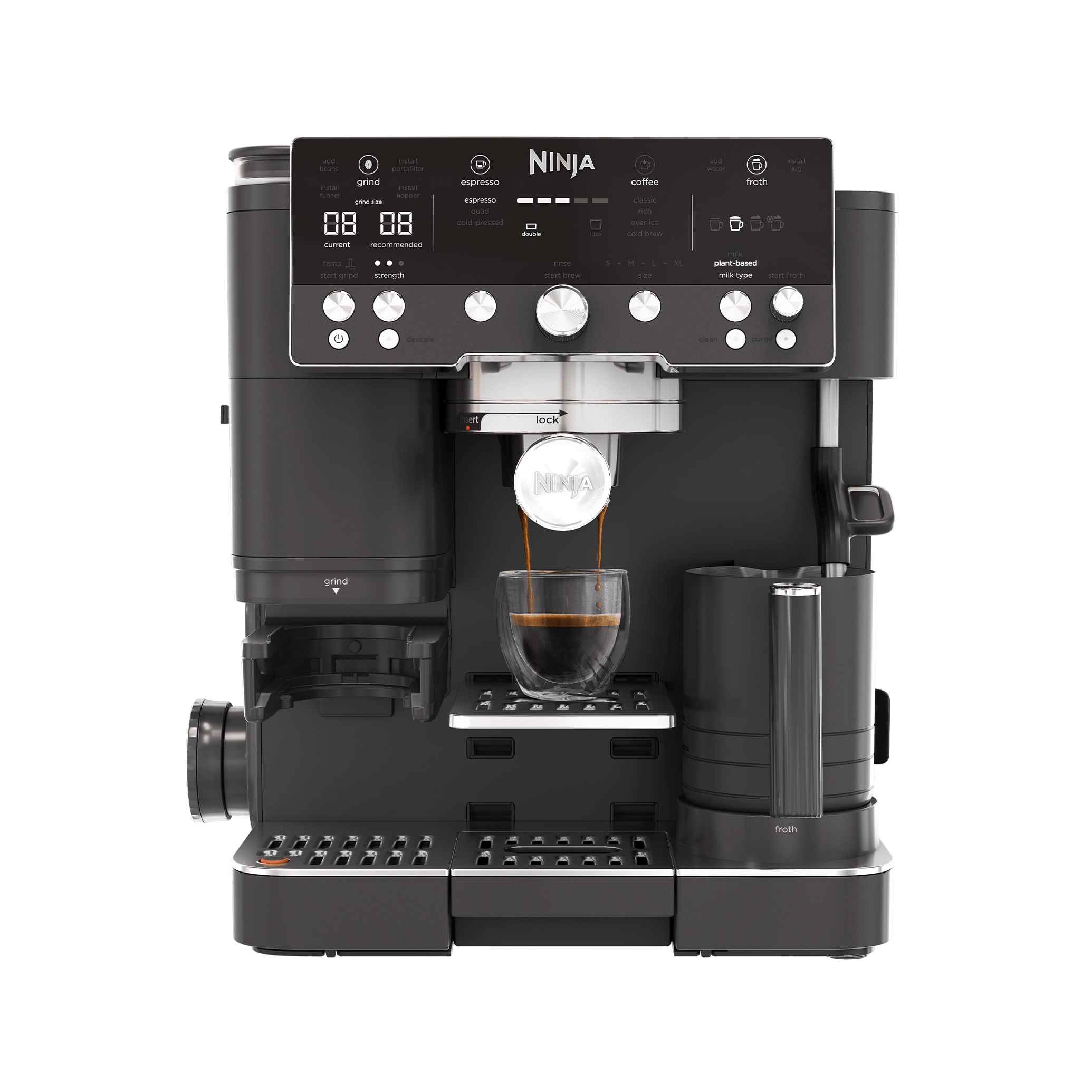
Ninja Luxe Café Premier
A complete guided setup with grinder, scale, assisted tamping, automatic milk and more drink styles than most households will exhaust.
- Checked price
- £439.99
- Width
- 33.6 cm
- Milk
- Auto hot/cold
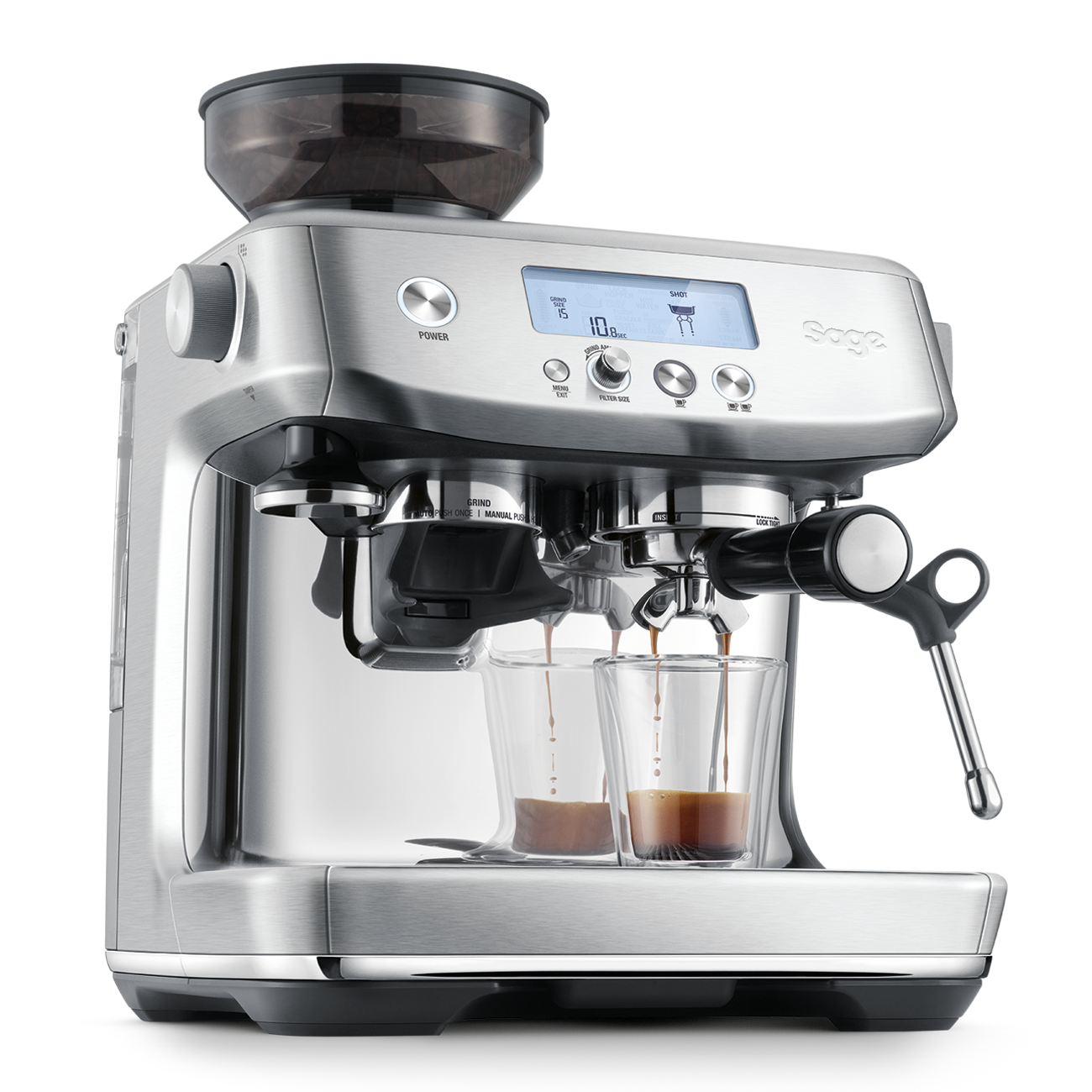
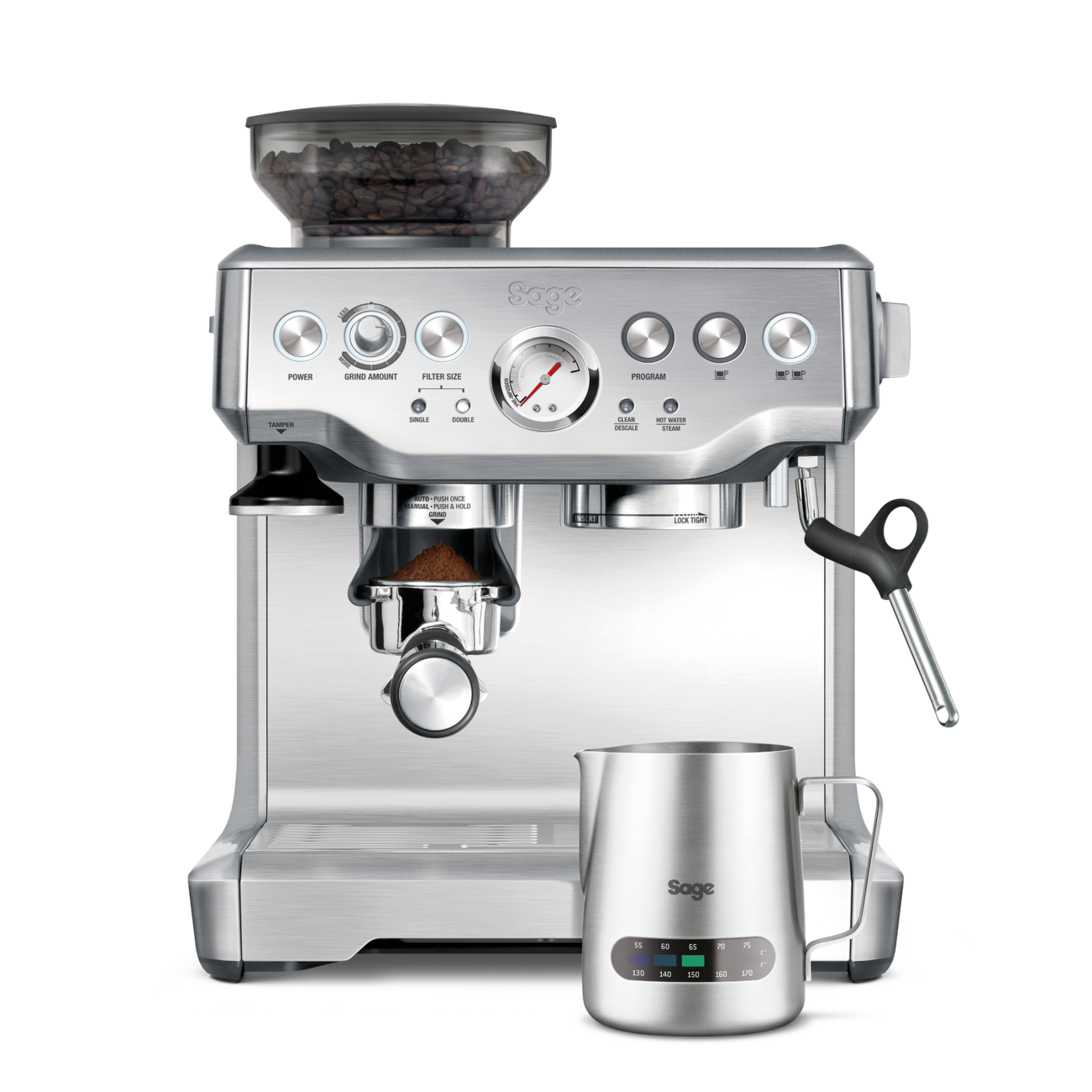
Sage Barista Pro
Fast heat-up, clearer shot feedback and a broader grinder range make the hands-on routine quicker and easier to diagnose.
- Checked price
- £600
- Width
- 35.4 cm
- Milk
- Manual steam
Below £300: buy simplicity, not promises
At this price, a compact manual machine can be excellent value. Prioritise a stable heat system, a usable portafilter and a steam wand you can control. Ignore long drink menus that are really variations on the same buttons.
The hidden cost is the grinder. If the whole setup must stay below £300, a manual machine may force an uncomfortable compromise between the two halves.
Around £500: the most interesting bracket
This is where the choices become genuinely different. You can build a compact manual setup, buy a machine with an integrated grinder, or choose a guided hybrid that weighs and recommends settings.
Spend here if you know what routine you want. The wrong £500 machine is more frustrating than the right £300 one.
Above £700: pay for a specific improvement
More money should buy something you can name: faster switching between coffee and steam, better grinder adjustment, stronger temperature control, easier cleaning or true one-touch milk.
If you cannot explain which daily problem the extra money solves, keep it for beans, a grinder or maintenance. Those purchases often improve the next five years more.
Before you choose.
Is a more expensive machine easier to use?
Sometimes. You may be paying for automation or clearer guidance, but many expensive manual machines assume more knowledge rather than less.
How much should I reserve for a grinder?
For a new espresso setup, roughly £180–£300 is a useful starting range. A grinder should make fine, repeatable adjustments rather than simply grind very finely.