The best coffee bean storage canisters—and when the bag is already enough.
Fresh beans need protection from oxygen, heat, moisture and light. A resealable one-way-valve coffee bag kept in a cool cupboard is already a good baseline; a canister mainly improves workflow and repeatable sealing.
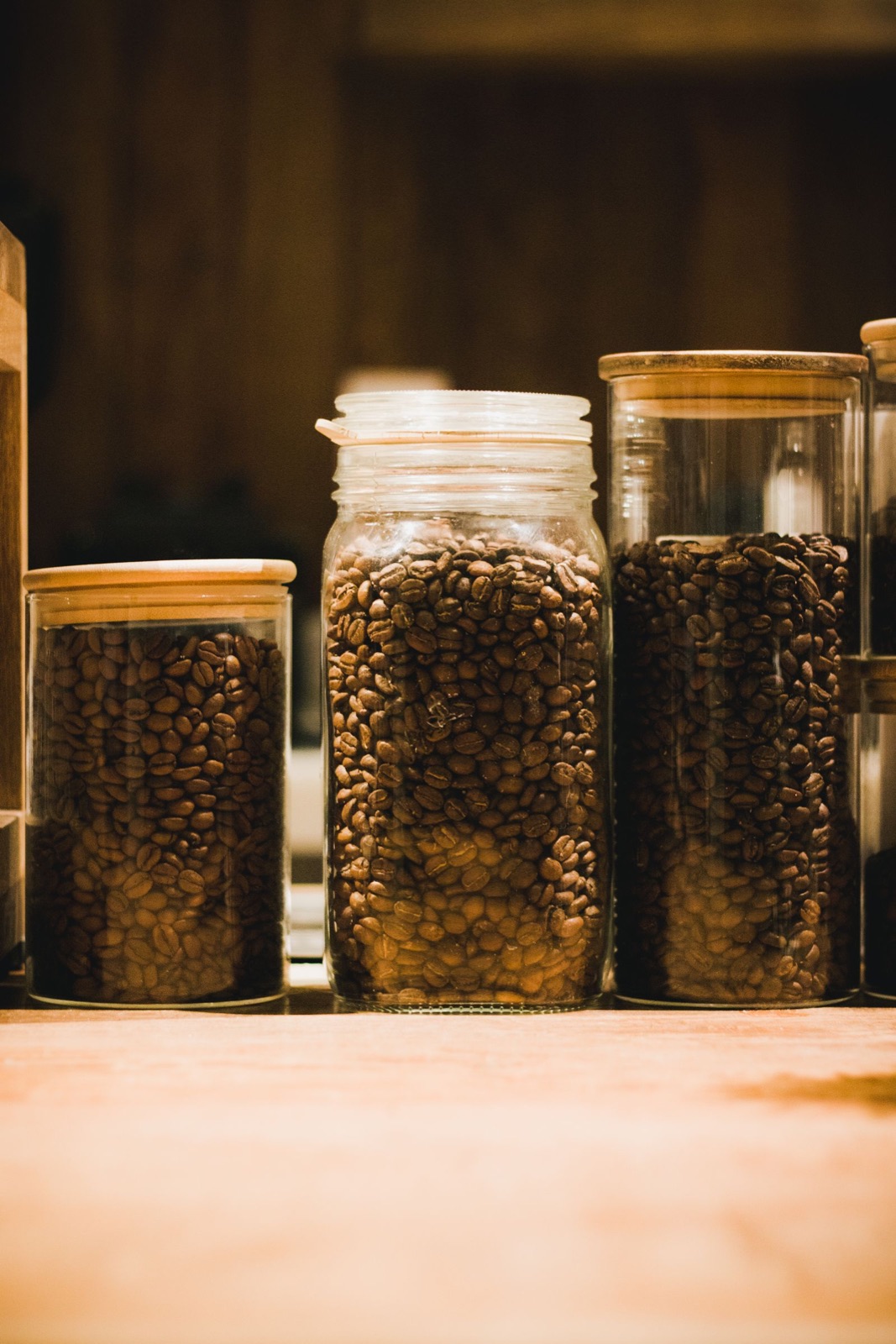
Coffee beans stored in jars. Clear glass should stay away from light; the guide explains when an opaque canister or original valve bag is a better choice.Photo: Jonathan Santiago on Pexels ↗
How these reviews work
These are independent desk-research reviews, not hands-on tests. Scores combine current manufacturer specifications, fit, usefulness, care requirements and value. We show the source for every pick and keep unknowns explicit.
Our editorial order is independent of retailer availability and commission. Confirm dimensions and exact compatibility before buying.
01
F
Best premium vacuum canister
Fellow
Atmos Vacuum Canister
Strongdesk evidence
A polished manual vacuum design with useful capacity options. It is intended for whole beans and needs periodic re-twisting to maintain the seal, so it improves the routine rather than making beans immortal.
Best for
Buyers who want a well-finished manual vacuum system and several size choices
Think twice if
Ground coffee, long-term storage or anyone happy with the original bag
Evidence checked
Manual vacuum-twist mechanism
Multiple capacity and material choices
Maker recommends refreshing the seal every four to five days
Pros
Strong sealing routine
Several sizes
Opaque steel options block light
Cons
Relatively expensive
Not dishwasher safe
Seal needs periodic attention
02
A
Best simple air-displacement design
Airscape
Classic Coffee Canister
Strongdesk evidence
The sliding inner lid reduces the air space above the beans with a very simple mechanism. It is easy to understand and robust, though it displaces air rather than creating a vacuum.
Best for
People who want a mechanical inner lid with no charging or vacuum pump
Think twice if
Buyers expecting a true vacuum or dishwasher cleaning
Evidence checked
Inner lid designed to displace excess air
18/8 stainless-steel body
Medium size commonly suits about 500 g
Pros
Simple mechanism
Opaque body
No battery or charging
Cons
Not a true vacuum
Hand washing recommended
03
D
Best large-capacity option
De’Longhi
DLSC071 Vacuum Canister
Strongdesk evidence
A large 1.5-litre stainless container rated for about 500 g of beans. It suits busy homes, but lower-volume drinkers should choose a smaller container or keep beans in their resealable bag.
Best for
Households buying around 500 g of whole beans at a time
Think twice if
Low-consumption homes where beans will sit for weeks
Evidence checked
1.5-litre capacity
Quoted capacity around 500 g of coffee beans
Stainless-steel body
Pros
Useful for 500 g bags
Opaque construction
Brand-matched styling
Cons
Too large for light users
Takes more counter space
Affiliate disclosure
As an Amazon Associate, Home Coffee Index earns from qualifying purchases. Amazon buttons open clearly labelled searches rather than implying a live price or stock promise. This does not affect scores or ordering.
Accessories are often returned because a dimension or daily workflow was assumed. These checks matter more than star ratings.
01
Keep the bag
A good resealable roaster bag with a one-way valve is often sufficient. Do not buy a canister just to create more decanting.
02
Avoid oversized jars
A half-empty container holds more air. Choose capacity around the bag size you normally buy.
03
Protect from light
Opaque steel is safer on a bright counter. Glass should stay in a dark cupboard away from heat and steam.
Quick answers
Questions worth answering first.
Is a coffee canister better than the original bag?+
Not always. A resealable, opaque one-way-valve bag stored in a cool cupboard is an excellent low-cost option. A canister is most useful when it makes sealing and dosing easier.
Should coffee beans go in the fridge?+
Usually no for daily use, because condensation and food odours are risks. For longer storage, freeze unopened or carefully portioned airtight bags and let them reach room temperature before opening.
How long do coffee beans stay fresh?+
There is no universal cutoff. Roast style, packaging and personal taste vary, but buying smaller amounts regularly and protecting them from oxygen, heat, moisture and light is more reliable than relying on a gadget.
The useful coffee email
One clear buying update. No daily noise.
Get new comparison tools, Bean of the Week, maintenance reminders and the few UK deal periods worth preparing for.