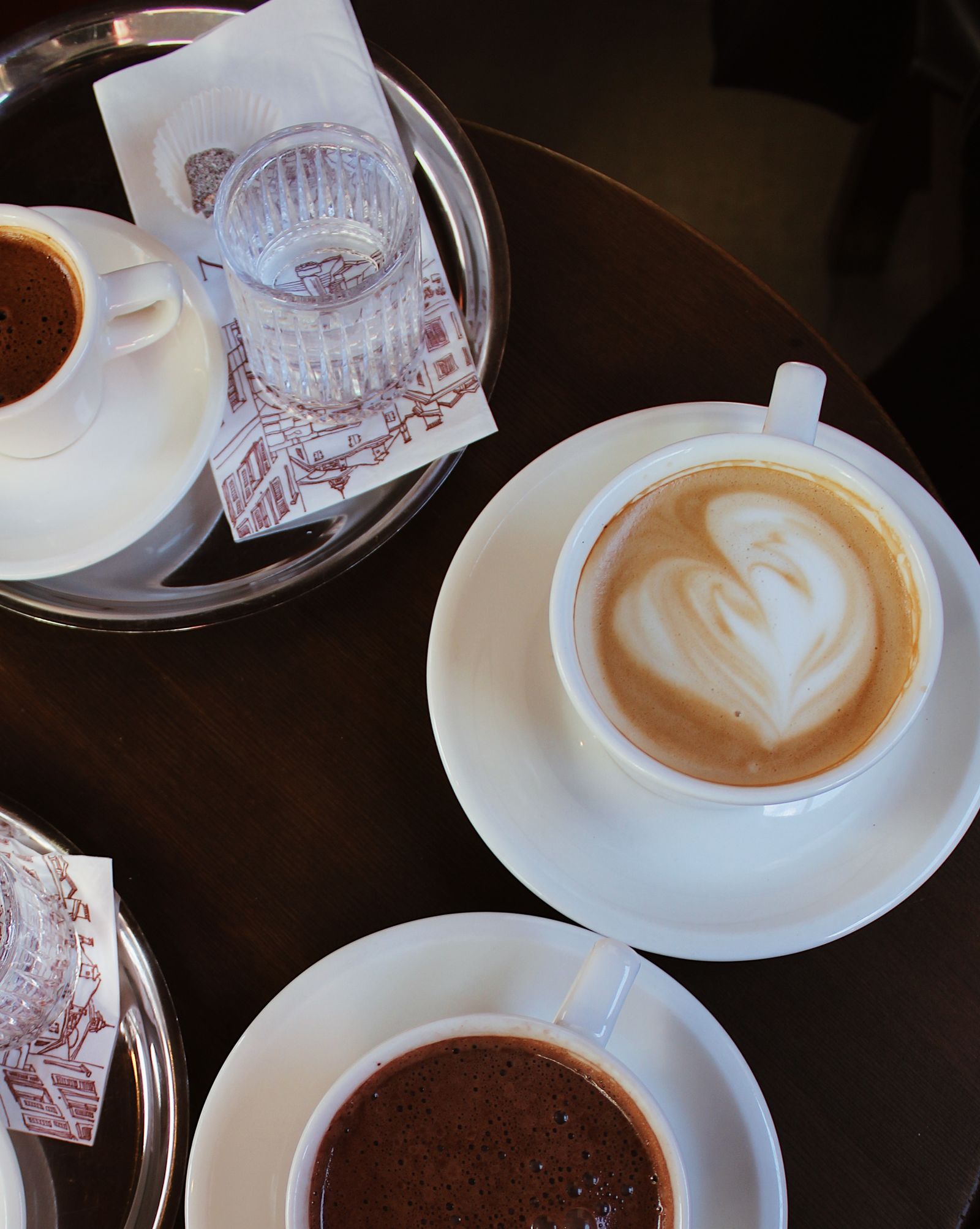
Cup size quietly controls dilution.
When espresso stays at 36 g but milk rises from 60 g to 200 g, the drink moves from roughly one part espresso to 1.7 parts milk to one part espresso to 5.6 parts milk. Milk softens bitterness and acidity, adds sweetness and body, and carries its own texture. Add too much and the coffee becomes background flavour.
A bigger vessel encourages a weaker recipe.
Cup capacity is not the same as drink size. A 300 ml cup does not need to be filled to the rim, but its empty space tempts people to add milk until it is. With the espresso unchanged, every extra gram of milk lowers coffee’s proportion of the drink.
This is why an 18 g dose producing 36 g of espresso can feel assertive in a 150 ml flat-white cup and muted in a 350 ml mug. The espresso has not failed; the serving ratio has changed.
One espresso, five very different drinks.
Figures use mass because foam makes volume deceptive. “Espresso share” is espresso mass divided by espresso plus milk mass, rounded to the nearest whole percent.
| Drink | Espresso | Milk | Espresso : milk | Espresso share | Useful cup | Result |
|---|---|---|---|---|---|---|
| CortadoMinimal aeration | 36 g | 60 g | 1 : 1.7 | 38% | 100–140 ml | Short, warm and coffee-forward |
| Flat whiteThin glossy microfoam | 36 g | 120 g | 1 : 3.3 | 23% | 150–180 ml | Concentrated but rounded |
| CappuccinoMore aerated microfoam | 36 g | 120 g | 1 : 3.3 | 23% | 150–180 ml | Similar mass, lighter texture |
| LatteSilky, lightly aerated | 36 g | 200 g | 1 : 5.6 | 15% | 240–300 ml | Longer, sweeter and milk-led |
| Oversized latteSilky, lightly aerated | 36 g | 280 g | 1 : 7.8 | 11% | 350 ml | One shot can disappear |
Example: 200 g milk ÷ 36 g espresso = 5.6, so the latte is approximately 1 : 5.6.
A flat white and cappuccino can share a ratio but not a mouthfeel.
Less air. Smaller apparent volume.
About 120 g of milk is kept thin, glossy and fluid. The coffee feels concentrated because the drink stays compact and the microfoam integrates closely with the espresso.
Measured flat-white recipe →More air. More volume from similar mass.
The same starting milk mass can occupy more space after aeration. Fine bubbles change texture, aroma release and the way liquid reaches the palate—even when the coffee-to-milk mass ratio is similar.
Measured cappuccino recipe →The cup changes more than the quantity.
Temperature
A heavy cold cup absorbs heat. Pre-warming an appropriate cup helps a small drink stay pleasant without overheating the milk.
Surface area
A wide cup exposes more coffee and gives space for latte art, but also loses heat faster than a narrow vessel of similar volume.
Foam depth
Cup shape affects how thick the foam layer appears and how quickly milk and microfoam combine as you drink.
Headroom
Leaving a little room prevents spills and removes the pressure to add milk merely to make the cup look full.
Start with the drink, then choose the cup.
These are practical reference points for a 36 g double espresso. Adjust around your basket, coffee and taste.
- 100–140 mlShort and coffee-forward
Cortado territory: a small amount of warm milk softens without hiding the shot.
- 150–180 mlBalanced milk coffee
Flat white or cappuccino territory: enough milk for sweetness and texture while espresso stays present.
- 240–300 mlLong and milk-led
Latte territory: smooth and gentle. Consider a second shot if you want the same coffee intensity in a larger cup.
Use the cup as a boundary, not a measuring tool.
- 01
Dial in the espresso
Measure dry dose and liquid yield. Do not change milk until the espresso tastes balanced.
- 02
Weigh the cold milk
Use enough for the drink and jug geometry, while avoiding a large quantity left behind.
- 03
Texture for the drink
Change incorporated air for flat white, latte or cappuccino—not the fineness of the bubbles.
- 04
Record the result
Note espresso yield, milk input and cup size. Adjust one of them next time rather than guessing all three.
Direct answers for better milk drinks.
Why does my latte taste weak at home?+
The most common reason is that the cup contains much more milk than the espresso recipe can balance. Measure the espresso yield and milk, then use a smaller cup or add another properly dialled shot rather than making the original shot run longer.
What cup size is best for a flat white?+
A 150–180 ml cup is a useful starting range for a 36 g double espresso with about 120 g of textured milk. Café recipes vary, so use taste and the actual basket dose rather than treating the range as law.
Is a cappuccino stronger than a flat white?+
Not necessarily. If both use the same espresso and milk mass, their coffee concentration can be similar. A cappuccino normally contains more incorporated air, which changes volume, texture and how the drink reaches the palate.
Should I measure milk before or after steaming?+
Weighing the cold milk before steaming is easiest for controlling waste; weighing the finished drink helps calculate the actual ratio. Milk gains volume from air but its mass changes very little apart from small losses left in the jug.
Should a larger cup get a longer espresso shot?+
Usually no. Running extra water through the same coffee bed changes extraction and can make the shot thin or bitter. Keep the dialled-in espresso recipe intact and add another shot when the larger drink needs more coffee strength.
The numbers are visible. The taste decision remains yours.
Our ratios are reproducible starting points rather than protected drink definitions. Manufacturer technique sources support the microfoam and pouring guidance.