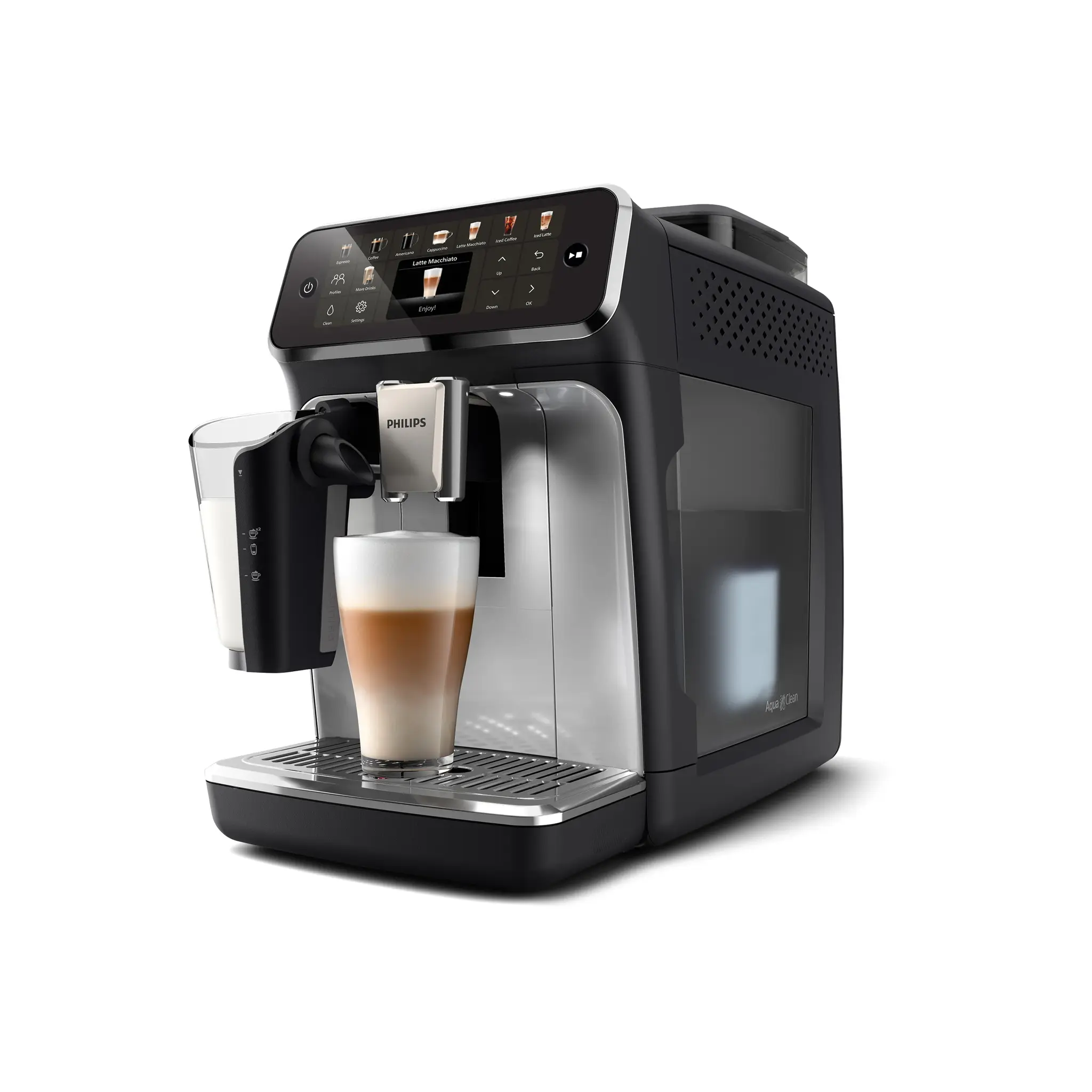
Flat-white buyers are often sent towards whichever machine has the longest drinks menu. That misses the point. The useful questions are whether the espresso can stand up to milk, whether the machine can make fine microfoam rather than stiff cappuccino froth, and how long the second drink takes.
We have compared the published specifications, daily workflow, checked UK prices and reputable editorial review signals. We have not pretended that a pump-pressure number tells you how the coffee will taste.
Different machines for different mornings.

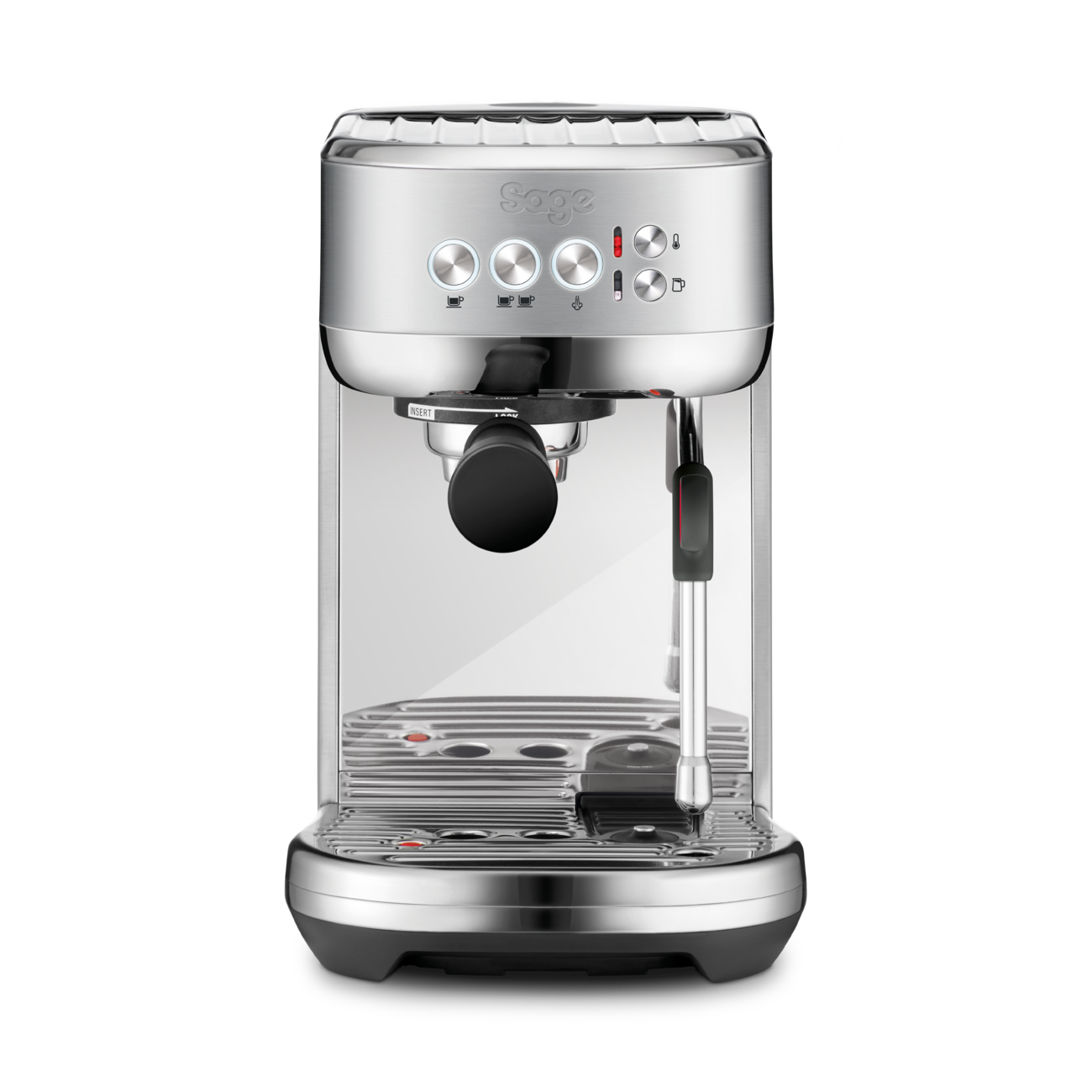
Sage Bambino Plus
The automatic steam wand offers three temperatures and three texture levels, while the narrow body and three-second heat-up make it unusually easy to live with. You still prepare the espresso, so there is room to improve rather than a fixed one-touch recipe.
- Checked price
- £329.95
- Machine width
- 19.4 cm
- Milk workflow
- Auto steam

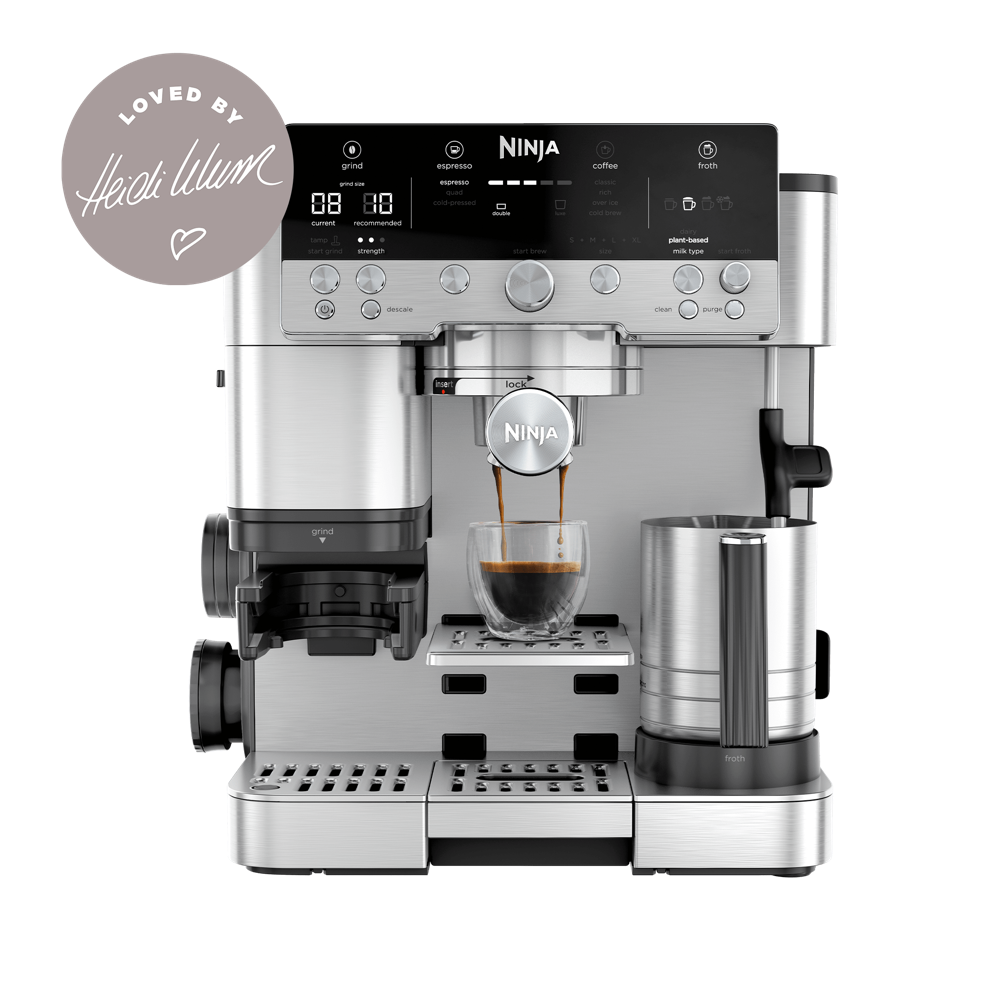
Ninja Luxe Café Premier
The grinder, weight-based dosing, guided settings and hands-free frothing remove several common beginner mistakes. It is a convincing choice when you want fresh preparation without building a setup from separate pieces.
- Checked price
- £439.99
- Machine width
- 33.6 cm
- Milk workflow
- Auto hot/cold

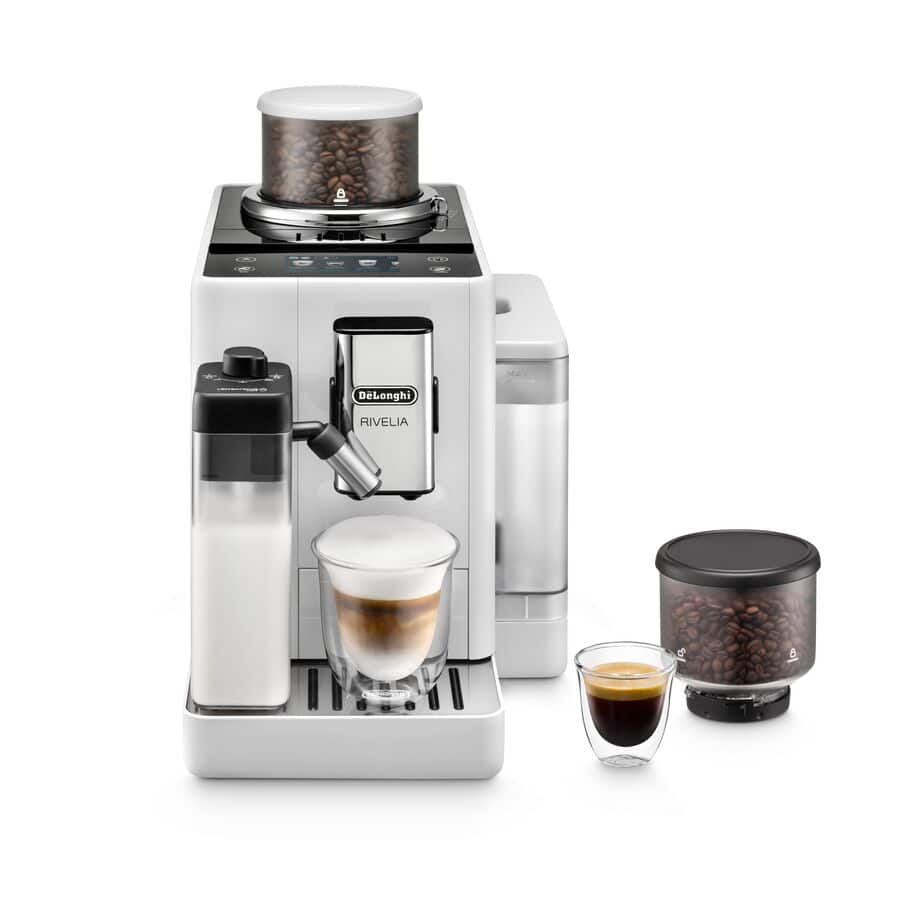
De’Longhi Rivelia
Choose a drink, attach the carafe and the Rivelia handles grinding, brewing and milk. User profiles and swappable bean hoppers are genuinely helpful in a household with different tastes.
- Checked price
- £599
- Machine width
- 24.5 cm
- Milk workflow
- Auto carafe
What actually makes a machine good for flat whites?
Steam quality matters more than a long list of named drinks. A flat white needs milk that is fine and glossy enough to fold into the espresso. Large bubbles and a dry cap of foam turn it into something closer to a cappuccino.
The espresso side matters too. Milk hides some faults, but it also makes weak coffee disappear. Fresh beans, a suitable grinder and an 18 g starting dose will change the result more than chasing the highest advertised pump pressure.
Manual, guided or one-touch?
The Bambino Plus is the best balance for most people because it automates the intimidating part—milk texture—without locking you into an internal grinder or fixed espresso recipe. The Ninja guides more of the process and includes nearly every extra you need.
The Rivelia is the honest choice when the ritual sounds like work. Its ceiling is lower than a well-dialled manual setup, but a repeatable drink you make every morning is more valuable than a theoretical perfect shot you rarely bother with.
Our flat-white verdict
Buy the Bambino Plus if you care most about milk texture and can accept a separate grinder. Buy the Ninja if you want an easier first setup with fewer missing pieces. Buy the Rivelia if everyone in the house wants to press a button and move on.
Whichever route you choose, use a smaller cup than a latte mug and stop steaming before the milk becomes scalding. Machine choice helps, but the final ratio is what keeps a flat white tasting like coffee.
Before you buy.
Can a bean-to-cup machine make a proper flat white?
It can make a good small milk drink, but many automatic carafes produce more aerated foam than a café-style flat white. Look for adjustable milk texture and reduce the default milk volume.
Is the Sage Bambino Plus worth it for milk drinks?
Yes, particularly for beginners. Its automatic wand is one of the easiest routes to fine milk texture, while manual steaming remains available when you want more control.
How much should I budget for a flat-white setup?
Allow about £500–£600 for a strong Bambino Plus setup once a grinder, scales and basic accessories are included. Integrated and one-touch machines cost more upfront but include the grinder.